Your slope is moving. Dirt in the flower bed, a fence post leaning, mud across the patio every time you water.
A concrete retaining wall is what goes in when your yard decides it would rather be somewhere lower, and we build them all over Visalia, from a two-footer holding a raised bed off a patio to a wall keeping half a back slope out of somebody's pool. Call it a cement retaining wall if you like. Either name, the part that decides whether it lasts is the part you will never see again once we backfill.
Our clay here swells up with irrigation and shrinks tight in the dry months, and a wall set on soil that was never dug down to something solid will lean out within a few seasons. So that is not how we do it. Nothing gets stacked on loose dirt because the schedule was tight.
Keep reading for how the wall gets built, what shifts the price, and when a wall is the wrong answer. Ring me and I will come look at the slope with you.
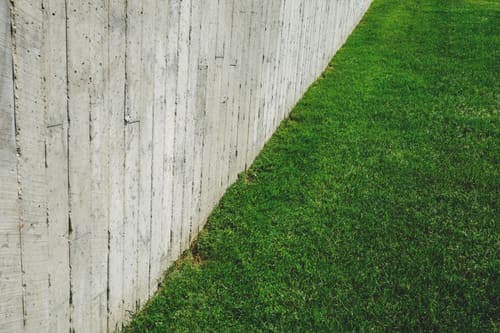
Cement Retaining Wall
Ask me for a cement retaining wall and I know exactly what you mean, so I'm not going to be pedantic about it. Cement is the gray powder that comes in the bag. Concrete is what you get once it's mixed with sand, rock and water, and that's what your wall is made of no matter which word ends up on the estimate.
Call any Visalia Concrete Contractor about a cement retaining wall and you'll be talking about the same thing.
The part I refuse to skip is drainage behind it. Washed gravel against the back face and a perforated line running out to daylight, so the wet season doesn't stack up water pressure back there. A concrete retaining wall that can't drain leans at the top first, then cracks.
Height is the biggest thing that moves the number, followed by length, how much soil is being held, and how much dirt we have to cut out to build the thing properly.
Poured Concrete Retaining Wall
Poured concrete retaining wall work gives you one solid piece from footing to cap, steel running continuous through it, and that is the reason it stays put while a dry-stacked block wall next door starts leaning out at the top. We set and brace the forms, tie vertical rebar down into the footing, then pour in one go and vibrate the mix so you do not get honeycomb voids hiding under a pretty face.
Behind the wall goes clean drain rock and a perforated pipe with somewhere to send water. Leave that out and the pressure builds through a wet stretch, and the wall bows before it cracks.
On a driveway retaining wall we usually step the footing where the grade falls and thicken the stem, since it is holding soil on one side and a truck's worth of weight on the other.
Height, length, curves, how much dirt comes out and gets hauled, and whether the chute reaches or we barrow it are what move the number on a concrete retaining wall.
Driveway Retaining Wall
Most of the driveway retaining wall jobs I take on are holding back a bank that somebody parks a vehicle on top of, and that changes the math. Every loaded truck up there leans on the wall, so the concrete footing for retaining wall work like this gets sized for the traffic as well as the soil, and it sits down in firm ground rather than in loose fill.
Drainage is where these let go. Gravel behind the stem, perforated pipe running out to daylight, weep holes through the face. Leave that out and a wet Visalia winter swells the clay behind the wall until the top bellies out and the joints step apart.
Soil goes back against the wall only once the concrete has cured. Pushing dirt at green concrete is how a brand new wall ends up leaning.
Length, height, how much material gets dug out and hauled away, and whether a machine can even reach the work all change what a concrete retaining wall beside a drive takes to build.
Concrete Footing For Retaining Wall
The concrete footing for retaining wall work is the part nobody sees and the part that decides whether the wall is still plumb in twenty years. We dig down past the soft stuff to firm, undisturbed ground, cut the trench wider than the wall itself, and set the footing so the heel sits back under the load instead of out front.
Rebar runs through it horizontally, and dowels stand up out of the wet pour so the base and the wall above it act as one piece rather than two things stacked on each other.
What I refuse to do is pour on top of the dirt that just came out of the hole. That fill settles, the footing tips a degree or two, and you end up with a lean at the cap and a crack right through the face.
Wall height, the clay we hit, how deep the trench has to go and whether a machine can reach it all move the cost of this stage. Retaining wall drainage belongs to the same conversation: gravel and a perforated pipe behind the stem, daylighted out, so water leaves instead of leaning on your concrete retaining wall all winter.
What the job involves
A concrete retaining wall starts with a hole, not a wall. We set the line, dig back into the bank and get down to firm ground, which out here usually means chewing through a foot or two of the hardpan clay everybody in this town hits when they try to plant a tree. Then forms, steel tied in a grid, and the pour in one shot so there's no cold joint for water to sneak into.
Behind the wall is where these things are won or lost. Retaining wall drainage means drain rock against the back face, filter fabric so the fines don't plug it up, and perforated pipe running out to daylight. Leave that off and the bank holds water like a sponge after a wet stretch, and the pressure either leans the wall out or splits it in a neat horizontal line a third of the way up.
Most walls run three to five days from first dig to stripping forms. Length, height, dig depth and whether a machine can reach the back yard move that either way.
What it costs
What a concrete retaining wall costs starts with height, because height decides the footing depth, the steel inside it and how much soil has to come off the bank before we form anything. Length matters less than most people expect.
What moves the number more is what goes in behind the wall. Drain rock, a perforated pipe and weep holes are the first things a thin bid leaves off the sheet, and without them your wall spends every wet month holding back water instead of dirt, which is exactly what tips a wall forward.
Then there is the hardpan we hit all over this valley, whether an old failing wall has to be broken out and hauled off, whether the bank sits under a slab or a fence carrying load, and whether a mixer can reach the forms or it all goes in by wheelbarrow.
Call us at (559) 316-5668 with the height, the run and a photo of the ground above it and we can put a real figure on it. Drainage is the one line nobody should be shaving.
When concrete retaining wall is the wrong fix
Sometimes a concrete retaining wall is an expensive way to hold back eight inches of dirt. If the ground only steps down a hand's width behind your patio, you don't need footings and drain rock, you need a thickened edge on the concrete slab and a little regrading, and I would rather say that standing in your yard than sell you a wall.
Water is the other one. If runoff is sheeting across the lawn every time the ditch backs up, a wall in its path turns into a dam, and the hydrostatic pressure behind it will win. Drainage first, then a wall if you still want one.
And if the wall you already have is solid but the face is flaking and gray, that is concrete repair or concrete resurfacing territory. If it is leaning with rusted steel showing, concrete removal has to happen before anybody forms anything new. Plenty of retaining wall contractors will pour over the top of that. Depth, access and how far gone the old wall is change the cost far more than length does.
Why choose us for this
You want a concrete retaining wall built once and then never thought about again, and you would rather not spend your weekends out there watching somebody else work. Fair enough.
The cheaper number usually leaves a few things off the sheet: drain rock and pipe behind the stem, a footing carried down to firm ground instead of the loose fill somebody dumped there years ago, and hauling the spoil off your property. Our ground holds water for days after a real soaking, and a wall with nowhere to send that water starts pushing out at the top inside a few seasons.
You pay for the drainage now or you pay for the rebuild later.
Plenty of concrete retaining wall contractors will price a job off height and length alone. We price access too, because when no machine fits down the side of the house, every yard of dirt and concrete moves by hand and the schedule stretches.
Over 12 years of this. The estimate costs nothing, and nothing obliges you to book it.
Frequently asked questions
Will a new wall tear up my yard or my neighbor's fence?
A concrete retaining wall needs a footing trench and room for a machine, so a strip of lawn along the work line takes a beating. We hand dig the last foot or so near fence posts and mature roots. Sprinkler lines get nicked now and then; we locate what we can first and splice anything we hit. My wall is leaning. Does the whole thing have to be replaced? If it's leaning, usually yes. A tilt means water pressure built up behind it and the footing moved, and skimming the face fixes none of that. If it's still plumb with hairline cracks or a bit of spalling, we repair it. We dig a test hole and look at the drainage before telling you which, which is what you want from concrete retaining wall contractors.
How soon can I backfill and plant behind it?
Two or three days after the pour, once it's taken its set. Gravel and a drain line go in first, then soil.
Contact Visalia Concrete Contractors now
Call when you're ready to talk about a concrete retaining wall, and you'll get concrete contractors who work right here in Visalia, not a crew driving down from Fresno for the day.
What I want to look at on site is how tall the wall has to stand, how long the run is, and whether the mixer can reach the forms or everything gets hauled by hand through a narrow gate. The hardpan sitting under most yards around here changes how we dig the footing, too. Those things move the number far more than anything you could describe to me over the phone.
We're around Monday through Friday, nine to five. Leave a message if we're out pouring and you'll get a call back from me, not a call center.
Licensed, bonded and insured, and you're welcome to ask for the certificate. The license number stays off this page because published ones get scraped and sold to spam callers, so ask and you'll get it.